
One Step Forward, Two Steps Back
We cannot take our rights for granted—not now, not ever


I have been sitting with the news out of the Supreme Court this week in Louisiana v. Callais, and I find myself returning to a familiar, bitter rhythm in American history: racial progress, followed by retrenchment. Advance, followed by erasure. One step forward, two steps back.
The Court’s latest decision weakening the Voting Rights Act is not simply a technical ruling about maps or districts. It is part of a long, deliberate pattern—one that stretches from Reconstruction to Jim Crow to the present day—in which Black political power is tolerated only briefly before being curtailed, diluted, or dismantled.
We are already seeing the consequences unfold in real time. Louisiana has halted elections to redraw congressional maps in a way that will almost certainly reduce Black representation. This is how it happens now—not always through poll taxes or literacy tests, but through the quiet, procedural violence of redistricting. Lines on a map become barriers just as real as any that existed in the past.
And it will not stop there.
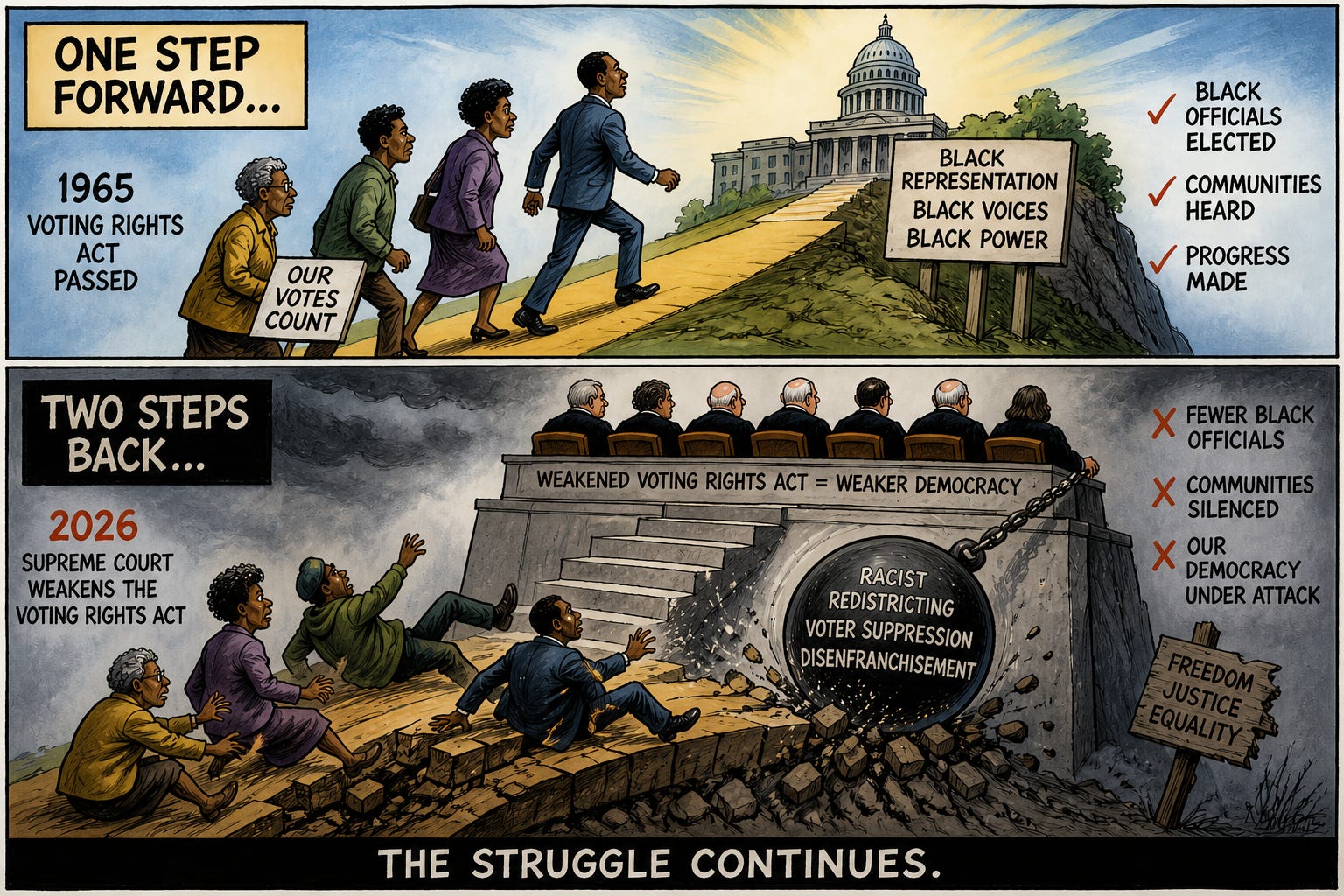
Across the South, and in northern, Western, and northeastern states where Republican legislatures hold power—Ohio comes immediately to mind—we should expect similar maneuvers. The mechanism is simple: fracture Black voting blocs, disperse them, render them politically inert. It is a strategy as old as the republic itself.
We are told these are neutral decisions. That they are about fairness, balance, and strict constitutional interpretation. But history gives us a clearer lens. Sixty years after the passage of the Voting Rights Act, we are watching a systematic effort to unwind its protections.
We have seen this before.
A Legal Whiplash: From Milligan to Callais
To understand just how precarious this moment is, we have to look closely at the legal back-and-forth that brought us here—specifically the uneasy relationship between Allen v. Milligan and Louisiana v. Callais.
In Milligan, the Supreme Court appeared—at least on the surface—to reaffirm the core of Section 2 of the Voting Rights Act. The Court held that Alabama’s congressional map likely violated the Act by diluting Black voting power and that, under longstanding precedent, the state could be required to draw an additional majority-Black district. For many observers, it felt like a rare moment of continuity—a signal that, even with a deeply conservative Court, some guardrails would remain in place.
That was the “one step forward.”
Louisiana responded to Milligan by redrawing its own congressional map to include a second majority-Black district, attempting to bring itself into compliance with the law as clarified by the Court. But that is where the story takes its turn.
In Callais, that very map—drawn to satisfy the principles articulated in Milligan—was challenged. And the Supreme Court’s willingness to entertain those challenges, and to allow the legal uncertainty to disrupt the electoral process, has had a chilling effect. Louisiana has gone so far as to halt elections while the map is contested, throwing representation itself into limbo.
This is the “two steps back.”
What we are witnessing is a kind of legal whiplash. A right affirmed in one moment is destabilized in the next. A remedy demanded in theory becomes suspect in practice. And the result is not clarity, but confusion—confusion that benefits those who would prefer delay, dilution, and disengagement.
This is how modern voter suppression often works. Not always through outright prohibition, but through uncertainty. Through litigation. Through delay. Through the erosion of public confidence and the strategic use of time itself as a political weapon.
The lesson here is stark: even when the law appears to bend toward justice, it can be quickly pulled back. The ground beneath hard-won rights is never as solid as it seems.
One step forward. Two steps back.
In my own work as a writer, I keep returning to Oakland—not just as a setting, but as a battleground of memory, power, and identity. In my upcoming Sonny Trueheart novel, Sanctuary, the central mystery involves the murders of unhoused people during the height of the pandemic. But beneath that surface, another current runs: the enduring tension around Black political and economic power in the city.
One of the threads I explore is the history of Oakland Scavenger, an Italian-owned company that, for decades, systematically excluded Black and Latino workers. When that system was finally challenged and dismantled, it did not simply disappear—it left behind white resentment. A sense of grievance. A belief among some that something had been taken from them.
That grievance—white ethnic grievance, specifically—does not remain confined to history. It mutates. It finds new language, new political vehicles, new targets. It reappears in debates about housing, policing, development, and governance. It shapes coalitions in ways that are often unspoken but deeply felt.
And it is part of a broader national story.
The Backlash
We cannot understand the present moment without acknowledging the backlash that followed the election of Barack Obama—the first president elected without a white majority. Donald Trump did not emerge in a vacuum. He was, in many ways, a reaction. A reassertion of white supremacy. A message that the arc of Black political progress would be contested at every turn.
What we are seeing now, with the Court and with state legislatures, is another phase of the long racial contest that has characterized this country since 1619. And remember, white supremacy depends on Blacks having absolutely nothing in order to prove its central and demonstrably false premise. Within the lie of white supremacy, an individual like myself with degrees from the University of Chicago, Stanford University, and Indiana University, Bloomington, will never and can never be anything more than an Affirmative Action admit or hire (I cannot begin to tell you how many times this has been said to my face) because I will never be remotely as qualified as any white man with a GED that you could pull of the streets.
So, this is not abstract for me. This “One Step Forward, Two Steps Back” movement is endemic to my life experience as a Black man in America. I am writing these words in a state of mourning. The hostility, the open expressions of hate, the steady erosion of rights—it takes a toll. It is difficult to watch, difficult to process, difficult to accept. But it has always been there, always central to the very definition of what it means to be American.
But I am also resolved.
The Struggle Continues
As an academic, I will continue to study, teach, research, and document. As a writer of mystery and noir, I will continue to tell stories that squarely confront these realities. The Sonny Trueheart series is not just about crime in the narrow sense. It is about systems. Power. History. The forces that shape who lives, who dies, who is protected, and who is forgotten.
The planned third book, Stakes is High, will push even further into this terrain. It imagines an Oakland mayoral race in which a wealthy Republican candidate promotes legalized gambling as a path to economic revival. On its face, it is a policy debate. Beneath it lies the deeper questions of racial power: who benefits, who is displaced, and how fragile Black political power in Oakland truly is.
Because that power is fragile. It has always been fragile.
We cannot take our rights for granted—not now, not ever. The Constitution itself was written without us in mind as full citizens. Every gain has required struggle. Every protection requires vigilance.
And every time we believe the work is done, history reminds us otherwise.
So yes—this moment carries urgency. It carries a warning. But it also demands commitment.
I will continue to write into this tension. To weave these histories and present realities into stories that entertain, yes, but also illuminate. To refuse the comfort of forgetting.
The struggle continues.
The People’s Detective is available now. Sanctuary is forthcoming in June 2026.

****************************************Get your copy of The People’s Detective now!!!
The People’s Detective on Amazon.com
The People’s Detective on Barnes & Noble
The People’s Detective on Bookshop.org
The People’s Detective on Thrift Books
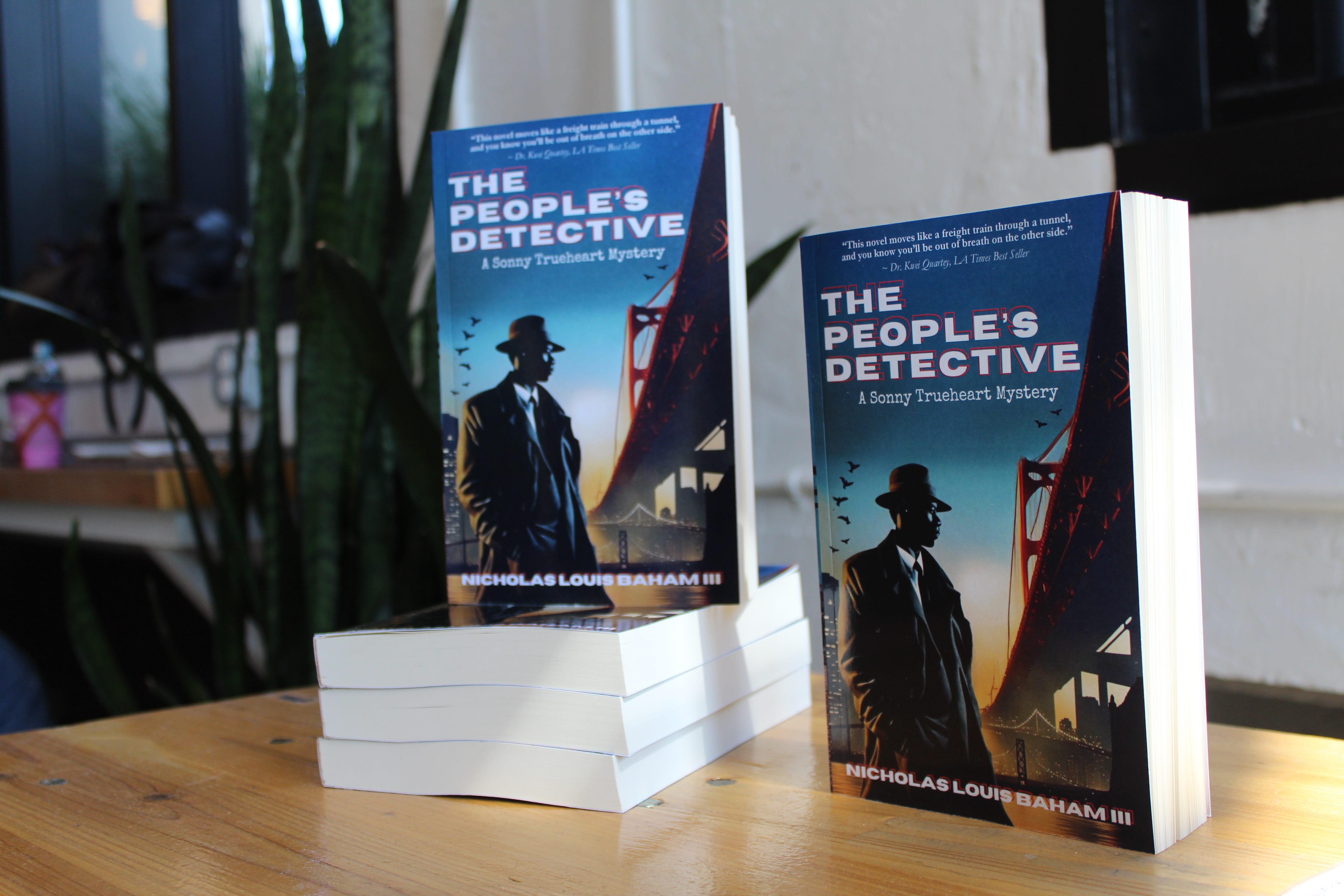
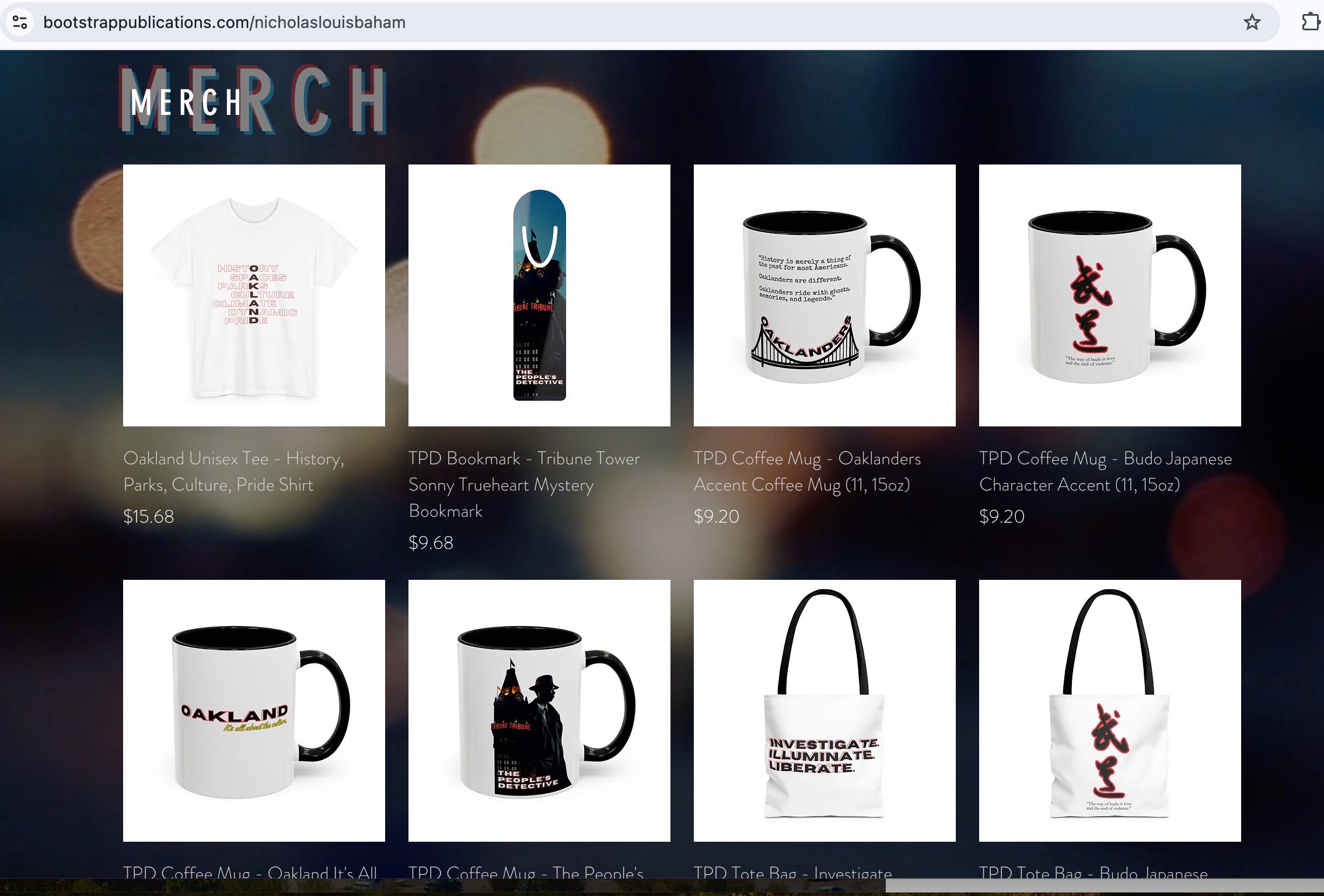
While You’re Here…Dont’ Forget to Get The People’s Detective Swag
The People’s Detective swag is all available on my author page on the Bootstrap Publications website.
Click on the link below!

The People's Detective Merchandise
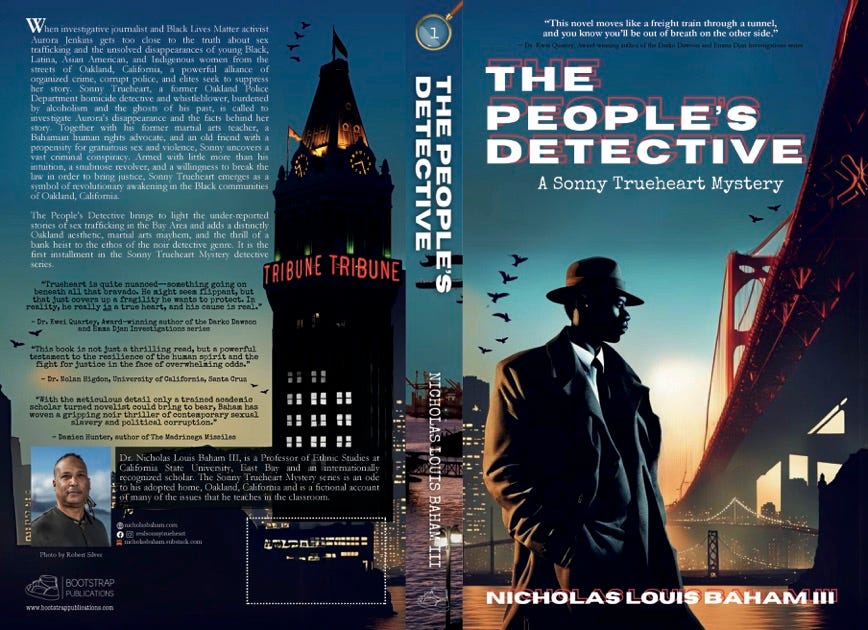
Remember that when you purchase The People’s Detective: A Sonny Trueheart Mystery or any of The People’s Detective merch, you are supporting a Woman of Color Owned Business!! Yes! Bootstrap Publications is a Woman of Color Owned Business!!
Read more about my publisher at Bootstrap Publications
Until the next time, this is the People’s Detective, Sonny Trueheart, signing off and asking you to be good to yourself and to one another!
From Oakland with Love,
Sonny Trueheart