
Two Masters, Two Eras: Comparing Spike Lee's "Highest 2 Lowest" and Kurosawa's "High and Low"
How Film Noir in Two Eras Critiques Wealth Inequality


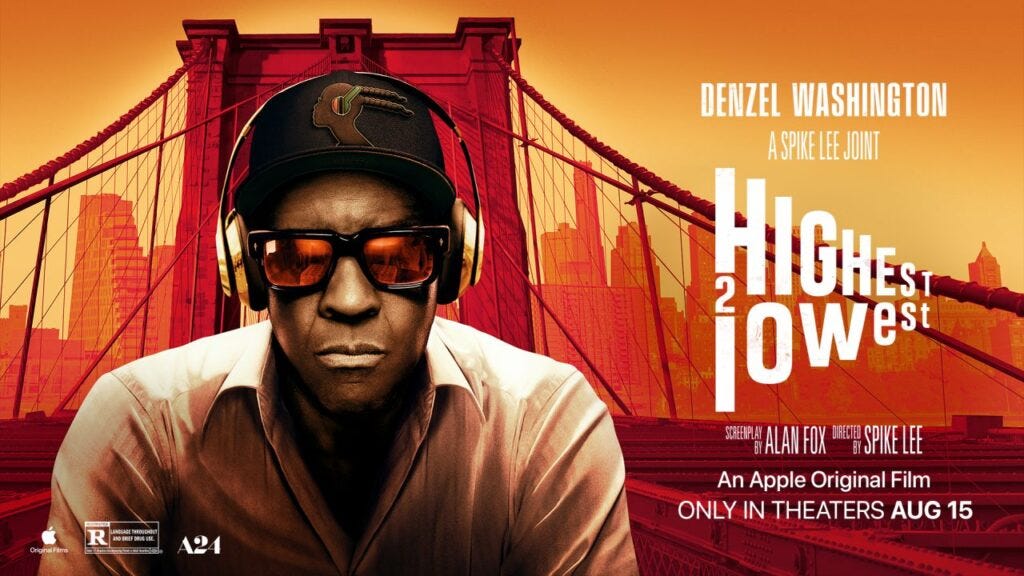
When Spike Lee set out to remake a Kurosawa masterpiece, expectations naturally soared. His latest film, "Highest 2 Lowest," a modern-day reimagining of Akira Kurosawa's "High and Low," has quickly shot to the top of Apple TV+ charts, bringing Denzel Washington into Lee's vibrant New York City landscape for what should be a natural marriage of social conscience and cinematic craftsmanship. But the critical question remains: Can Lee’s remake match Kurosawa’s surgical class critique? This central query guides the exploration of both the enduring power of Lee's directorial voice and the frustrating limitations that prevent this remake from achieving the devastating social critique of its predecessor. Ultimately, this analysis assesses whether Lee can capture the essence of class conflict in contemporary America as effectively as Kurosawa did in post-war Japan.
The Moral Labyrinth: Film Noir in Two Eras
Both films operate squarely within the film noir tradition, although they approach the genre's essential moral ambiguity from different cultural perspectives. Lee's version centers on a music mogul (Washington) who finds himself "jammed up in a life-or-death moral dilemma" when targeted with a ransom plot. A distinctive feature of Lee's adaptation is its use of New York's urban landscape, reminiscent of classic noir's chiaroscuro lighting, creating a rich visual contrast that reflects the protagonist's moral struggles. Like Kurosawa's shoe company executive Kingo Gondo, Washington's character initially struggles with the central ethical question: should he sacrifice his fortune to save another man's child? This predicament, rooted in a classic fatalistic noir plot, underscores the timeless tension between personal interest and moral obligation.
This moral hesitation—the wealthy protagonist's reluctance to pay ransom for his driver's son—forms the dark heart of both narratives. In classic noir fashion, neither film offers easy answers or clear-cut heroes. The protagonists exist in that shadowy moral territory where personal interest collides with human decency, where wealth creates both opportunity and moral blindness.
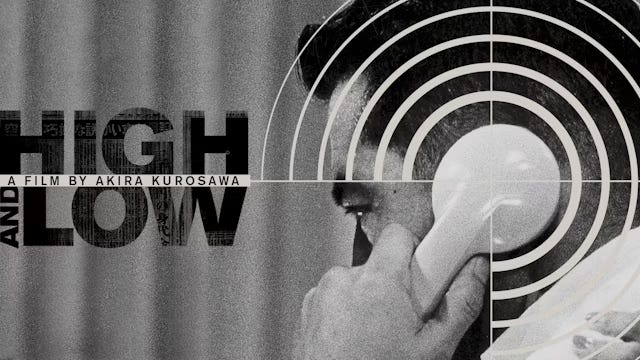
Kurosawa's 1963 masterpiece remains one of cinema's most penetrating explorations of class consciousness disguised as a kidnapping thriller. The Japanese master used the noir framework to dissect post-war Japan's social stratification with surgical precision, examining how economic disparity corrodes the social fabric. Lee, America's most vital chronicler of racial and social injustice, seems positioned to deliver an equally devastating critique of contemporary American inequality.
Where Lee Soars: The Pulse of New York
Lee's film "lovingly showcases New York City" with the same passionate eye he's brought to the metropolis throughout his career. His love for the city's beautiful diversity pulses through every frame, never more vibrantly than in sequences like the Puerto Rican cultural festival featuring the legendary Eddie Palmieri on piano. These moments showcase Lee at his most generous and celebratory, capturing the multicultural energy that makes New York a character in its own right.
This is quintessential Spike Lee—the director who has spent decades exploring the complex social dynamics of urban America. From the crack epidemic in "Jungle Fever" to the racial tensions of "Do the Right Thing," from the moral breakdown depicted in "Summer of Sam" to numerous other examinations of American social pathology, Lee has consistently chosen the difficult subjects that other filmmakers tend to avoid.
This commitment to confronting uncomfortable truths is precisely why Lee remains America's most important filmmaker, far surpassing more critically lauded directors like Martin Scorsese, who seems content to mine the same mobster territory repeatedly. Lee's willingness to tackle systemic issues—whether addiction, racism, class warfare, or urban decay—has given his filmography a weight and relevance that transcends mere entertainment.
The Missed Opportunity: America's Second Gilded Age
Yet "Highest 2 Lowest" represents a significant missed opportunity, particularly when measured against Kurosawa's unflinching examination of social inequality. One critic noted that Lee's film "attempts to remake a beloved Akira Kurosawa film about the injustices of a class-stratified society all while sidestepping class"—a damning assessment that cuts to the heart of the film's central failure.
Kurosawa's original didn't merely use the kidnapping as a plot device; he wielded it as a scalpel to expose the infected wounds of post-war Japanese society. His film thoroughly investigated and interrogated American-occupied Japan, revealing a world plagued by lawlessness, moral breakdown, and heroin addiction depicted as a social epidemic. The second half of "High and Low" delves into Tokyo's underworld with anthropological precision, illustrating how poverty and desperation foster the conditions for moral decay.
We live in America's Second Gilded Age, where wealth concentration at the top 1% has reached levels not seen since the era of robber barons. According to a recent data point, the richest 1% of Americans now hold more wealth than the entire middle class combined, highlighting the pressing nature of this socioeconomic divide. This should be fertile ground for Lee's social commentary, yet "Highest 2 Lowest" fails to dig deep enough into this contemporary crisis. While Kurosawa spent considerable time exploring the kidnapper's world and motivations, Lee's adaptation shifts focus toward "the importance of music to the narrative and themes" rather than deepening the class analysis.
The film would have benefited enormously from more time spent with A$AP Rocky's character, who serves as the modern counterpart to Kurosawa's desperate kidnapper. A$AP Rocky's character, a young man drawn into the underworld of New York City, navigates a treacherous socioeconomic landscape that could mirror the systemic failures Kurosawa so meticulously unveiled. To develop this character further, Lee could have included scenes depicting A$AP Rocky's daily struggles, such as interactions with figures in New York's underbelly that reveal both his vulnerability and the harsh realities of his environment. A flashback could have illuminated his motivation, possibly showing a pivotal moment where economic hardships pushed him towards precarious decisions. This narrative technique would allow for a deeper exploration of his worldview, shaped by desperation and ambition intertwined. Had Lee delved into this character's motivations beyond mere plot functionality, he might have added layers of complexity to the narrative, bringing to light the personal and cultural struggles that contribute to his choices. Where the Japanese master used his criminal as a window into systemic social failure, Lee treats the antagonist more as a plot function than a sociological case study. This represents a fundamental misunderstanding of what made the original so powerful.
The Lee Legacy: Ambition and Limitation
Critics have noted that while Lee "shows off his knack for framing New York City in a lively, exciting way, and touches on similar themes as the original," he "doesn't quite stick the landing". This assessment captures both Lee's enduring strengths and the specific failures of this project.
Lee's cinematic eye remains as sharp as ever, and his commitment to representing urban diversity continues to set him apart from his contemporaries. The film pulses with the energy of contemporary New York, and Washington's performance anchors the moral complexity with his characteristic gravitas. As one review noted, the film is "ambitious, uneven, yet vital," with Washington anchoring "a gripping moral dilemma, while Lee infuses it with New York's pulse and sharp racial commentary."
But Lee's reluctance to fully embrace Kurosawa's more radical class critique ultimately diminishes the film's impact. In an era when American inequality has reached crisis proportions, with the gap between the rich and the poor widening more than at any point in living memory, audiences deserved the full force of Lee's social consciousness applied to these themes. A more radical class critique in Lee's context might have involved delving deeper into the lived experiences of the marginalized communities, showcasing scenes that directly tackle systemic barriers such as gentrification, access to education, and the gig economy's pitfalls. Lee could have integrated narratives that highlight grassroots struggles, such as community organizing against displacement, thereby turning the film into a more profound exploration of power dynamics in contemporary American society. By focusing on these elements, Lee might have provided a richer, more nuanced interpretation of the socioeconomic issues at play, offering a more comprehensive comment on class structure beyond the confines of individual morality.
The Chauffeur's Dilemma: Wright vs. Sada
The chauffeur characters in both films represent one of the most telling differences between the directors' approaches to class and loyalty. Jeffrey Wright plays Paul Christopher, described as "the chauffeur and confidant of Denzel Washington's music mogul, David King," while Yutaka Sada portrayed Aoki in Kurosawa's original.
Wright brings his characteristic intellectual intensity to Paul Christopher, a man who operates as both employee and trusted advisor within the contemporary entertainment industry's more fluid hierarchies. The review notes Wright delivers "an exceptional" performance as a chauffeur whose relationship with his wealthy employer transcends simple class boundaries. Wright's Paul is positioned as "confidant" rather than mere servant, reflecting both Wright's gravitas as a performer and Lee's interest in exploring how professional relationships operate within modern Black success stories.
Sada's Aoki, by contrast, embodies the more rigid social structures of 1960s Japan. In a key scene, "chauffeur Aoki tries to thank his boss" after the moral crisis begins, highlighting the formal distance that exists even within their relationship. Kurosawa uses Aoki not as a confidant but as a representation of Japan's working class—a man whose gratitude and deference illuminate the vast social gulf that Gondo must bridge through his moral choice.
The difference reveals how each director uses the chauffeur relationship to serve their larger themes. Wright's Paul operates within Lee's exploration of contemporary Black wealth and the complex relationships it creates—where loyalty and friendship can coexist with employment in ways that reflect the particular dynamics of African American success. Sada's Aoki serves as a counterpoint to Kurosawa's broader critique of class stratification, where the rigid social hierarchy makes Gondo's eventual sacrifice all the more morally significant.
Wright's performance, drawing on his decades of experience in both theater and film, brings psychological depth to a character who could have been merely functional. His Paul Christopher becomes a window into how Lee views loyalty, friendship, and class within the specific context of Black American achievement. It's a more complex relationship than Kurosawa's original, but perhaps one that serves Lee's thematic interests rather than the deeper class critique that made the original so powerful.
Partners in Crisis: Kagawa vs. Hadera
Both films also feature compelling performances from their female leads, though in markedly different contexts. Kyōko Kagawa plays Reiko Gondo, the executive's wife in "High and Low," while Ilfenesh Hadera takes on the role of Pam King, the music mogul's partner in Lee's adaptation.
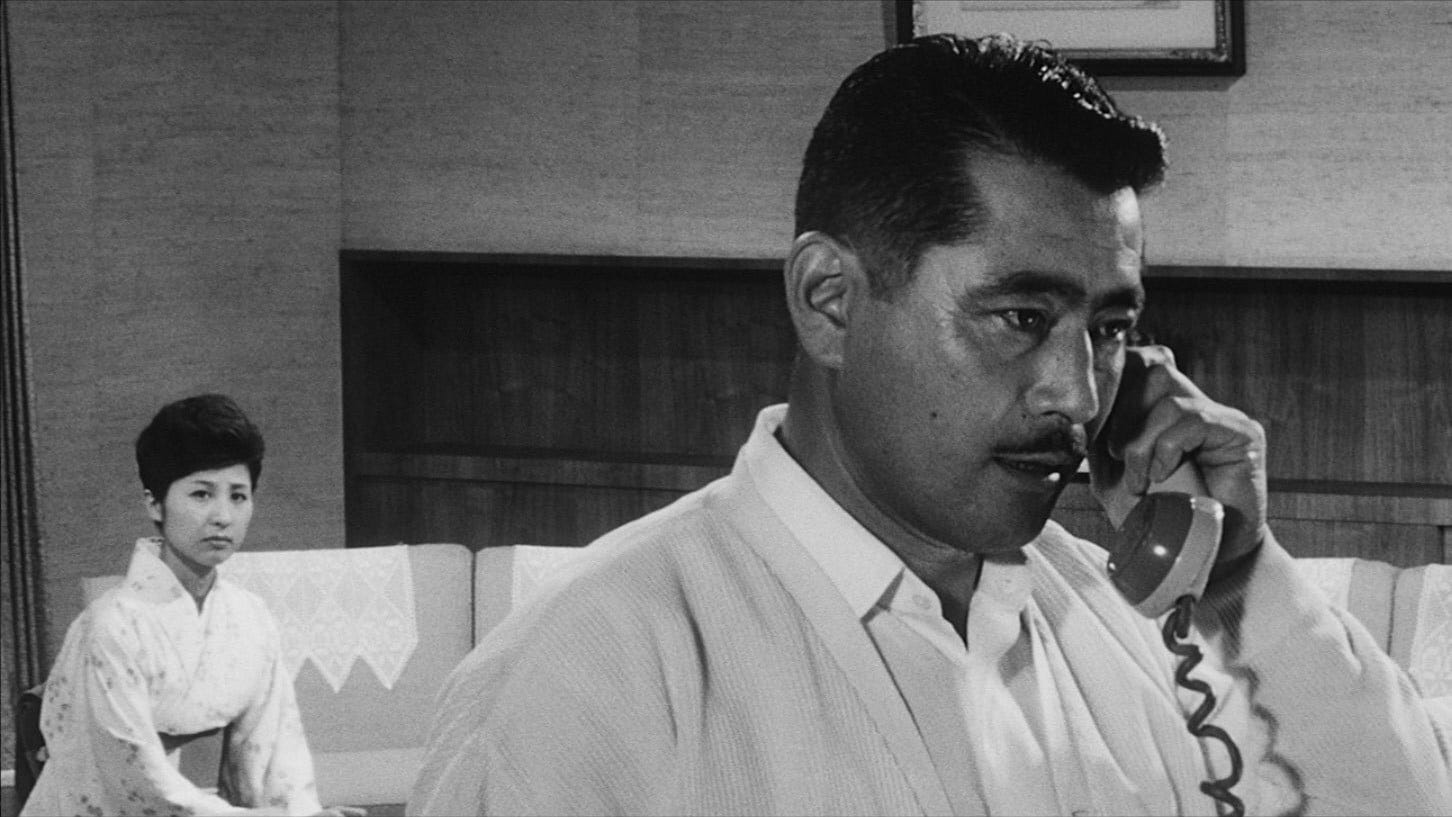
Kagawa, already a veteran of Japanese cinema by 1963, having worked with masters like Yasujiro Ozu and Kenji Mizoguchi, brought a refined emotional intelligence to the role of the corporate wife. In "High and Low," she played "the apprehensive wife of a kidnapped president" (though it's actually the chauffeur's son who's kidnapped), embodying the moral support and quiet strength that anchors Mifune's character through his crisis of conscience. Kagawa's performance adheres to the classical tradition of Japanese cinema, where restraint and subtlety convey enormous emotional weight.
Hadera, marking her fifth collaboration with Lee, brings a different energy to her role as Washington's partner. Where Kagawa represented the traditional supportive spouse within the rigid social hierarchies of 1960s Japan, Hadera's character operates in the contemporary entertainment industry's more fluid power dynamics. Her performance reflects the evolution of women's roles in both society and Lee's filmography—she's not merely the moral conscience but an active participant in the couple's high-stakes world.
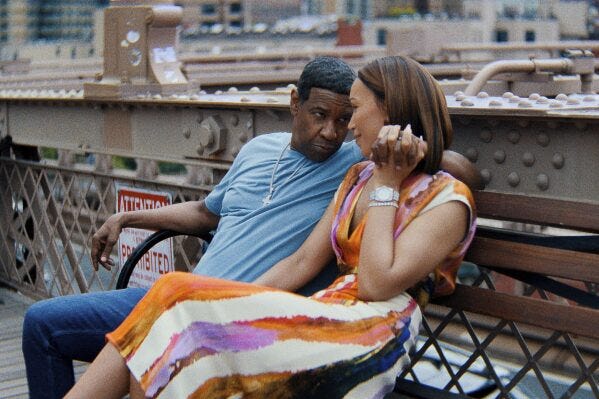
The contrast reveals how both directors work within their respective cultural moments while serving the larger themes of their films. Kagawa's more traditional role serves Kurosawa's exploration of social responsibility within established hierarchies, while Hadera's contemporary partnership reflects Lee's interest in how wealth and moral choice operate within more complex modern relationships.
Two Titans: Mifune vs. Washington
The casting of these films reveals another fascinating layer of comparison. Both Toshiro Mifune in "High and Low" and Denzel Washington in "Highest 2 Lowest" were established masters of their craft, veteran actors bringing decades of accumulated gravitas to their roles as morally conflicted wealthy men.
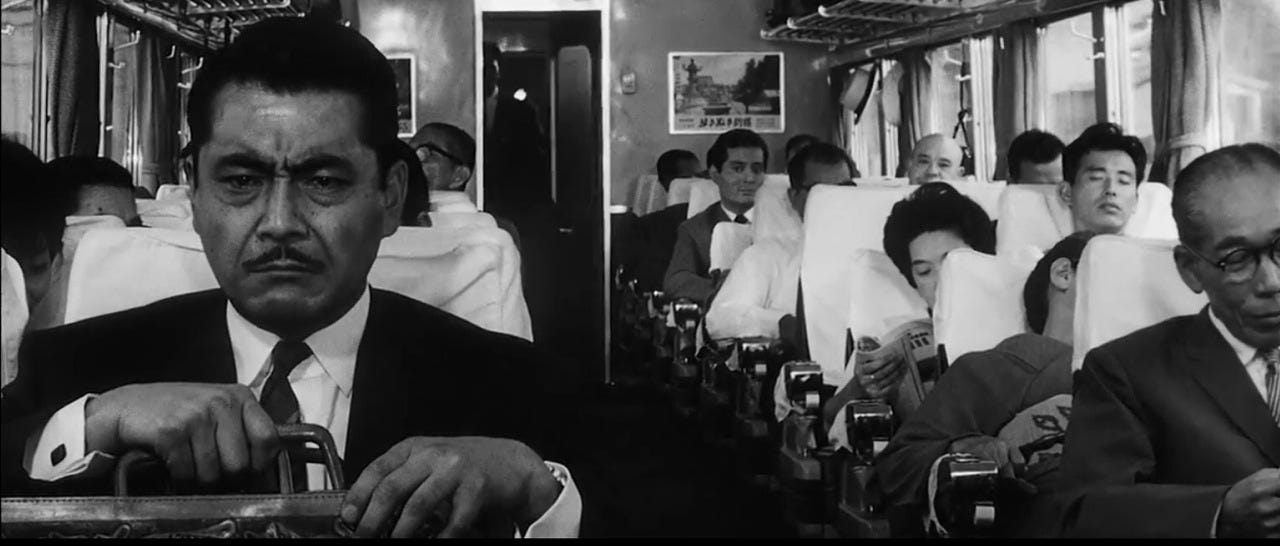
Mifune, at 43 when he made "High and Low," was already Kurosawa's most frequent collaborator, having appeared in thirteen of the director's films. By 1963, he had perfected a screen persona that could seamlessly shift between explosive passion and controlled restraint. In "High and Low," Mifune delivers what many consider his most psychologically complex performance, playing executive Kingo Gondo as a man whose moral universe gradually expands beyond his immediate self-interest. Mifune's physicality—his famous intensity barely contained beneath a businessman's suit—becomes a visual metaphor for the class tensions the film explores.
Washington, now 70 and in his fifth decade of screen acting, brings a different yet equally compelling presence to his portrayal of the music mogul. Where Mifune's performance burns with barely suppressed volcanic energy, Washington operates with the cool precision of a jazz musician—measured, controlled, but with emotional depths that surface in crucial moments. His decades of playing morally complex characters, from Malcolm X to Alonzo in "Training Day," inform his portrayal of a wealthy man forced to confront his own moral limitations.
The key difference lies in how each actor embodies their character's relationship to wealth and power. Mifune portrays Gondo as a man who has climbed the social ladder through determination and sacrifice, making his eventual moral choice feel like a rejection of everything he has worked to achieve. Washington's character, rooted in the music industry's particular brand of wealth and cultural influence, carries the weight of representing Black success in America—a dimension that adds complexity to his moral dilemma but also, perhaps, constrains the film's ability to interrogate wealth itself as thoroughly as Kurosawa's original. Representations of Black success in American cinema often shape audience expectations and narrative possibilities, as they reflect broader cultural conversations about achievement, race, and resilience. These portrayals not only influence the character's journey in the story but also impact viewers' understanding of the intersection between race, wealth, and power in society.
Both performances anchor their respective films with commanding screen presence, yet they serve different narrative functions. Mifune's Gondo becomes a vehicle for Kurosawa's broader social critique, while Washington's character, despite the actor's considerable skill, remains more contained within the thriller framework rather than expanding into deeper sociological territory.
Is Lee Our Kurosawa? A Tale of Two Masters
The question naturally arises: Is Spike Lee America's Akira Kurosawa? The comparison reveals both tantalizing parallels and instructive differences between two directors who have spent their careers using cinema as a vehicle for social commentary.
Kurosawa's 30-film career spanned nearly five decades, from 1943 to 1993, during which he established himself as cinema's supreme visual poet and humanist philosopher. His films consistently explored themes of honor, social justice, and moral courage, whether set in feudal Japan ("Seven Samurai," "Yojimbo") or contemporary settings ("Ikiru," "High and Low"). Kurosawa possessed an almost supernatural ability to combine spectacular visual storytelling with profound psychological insight, creating films that worked simultaneously as entertainment and social critique.
Lee, now in his fourth decade as a filmmaker with over 35 features, has similarly built his career around urgent social themes. From his breakthrough film "She's Gotta Have It" through "BlacKkKlansman" and beyond, Lee has consistently chosen projects that interrogate the most uncomfortable truths in American society. Like Kurosawa, he's a visual stylist who uses cinematic technique to amplify thematic content—think of the floating dolly shots in "Do the Right Thing" or the direct-to-camera addresses that break the fourth wall.
Both directors share an uncompromising vision that has sometimes put them at odds with commercial pressures. Kurosawa famously struggled with studio financing in his later career, leading to his attempted suicide in 1971. Lee has similarly battled Hollywood's reluctance to fund challenging material, often turning to independent financing or, in recent years, streaming platforms to bring his vision to life.
Yet crucial differences emerge in their approaches to universal themes. Kurosawa's humanism transcended cultural boundaries—his samurai films spoke to audiences worldwide because they explored fundamental questions of courage, sacrifice, and moral choice. His camera captured both intimate human moments and epic scope with equal mastery, creating a cinematic language that influenced generations of filmmakers from George Lucas to Zhang Yimou.
Lee's work, while no less passionate or committed, is deeply rooted in the African American experience and contemporary American social issues. Like Kurosawa, who wanted audiences to recognize the universal dimensions of the Japanese experience—whether through feudal samurai or post-war reconstruction—Lee seeks to illuminate how fundamentally universal the Black American experience truly is. When Lee explores gentrification in Brooklyn, police brutality, or the psychological toll of racism, he's not making "niche" films about minority concerns; he's revealing how these experiences expose broader truths about power, justice, and human dignity that resonate far beyond their specific cultural context.
Perhaps most significantly, Kurosawa operated within a film culture that still believed in cinema's capacity for serious artistic statement. The 1960s Japanese film industry was characterized by a willingness to invest in artistic expression; filmmakers like Kurosawa were supported by studios that valued the artistic prestige and social commentary delivered through cinema. This period offered directors more freedom to explore complex themes with depth and a focus on societal critiques. In contrast, Lee works in an era where commercial pressures and shortened attention spans often force compromises that would have been unthinkable in Kurosawa's prime. The economics of the streaming era have introduced new constraints on filmmakers, where algorithms often favor content that is flashy and concise, potentially limiting the scope for deep social critique. For example, budget constraints and the need for algorithmic appeal can influence both the runtime and thematic depth of a film, as producers aim to keep audiences engaged. This context may explain why 'Highest 2 Lowest,' despite Lee's considerable talents, doesn't achieve the sustained social critique of its predecessor.
Perhaps most significantly, Kurosawa operated within a film culture that still believed in cinema's capacity for serious artistic statement. Lee works in an era where commercial pressures and shortened attention spans often force compromises that would have been unthinkable in Kurosawa's prime. The economics of the streaming era have introduced new constraints on filmmakers, where algorithms often favor content that is flashy and concise, potentially limiting the scope for deep social critique. For example, budget constraints and the need for algorithmic appeal can influence both the runtime and thematic depth of a film, as producers aim to keep audiences engaged. This context may explain why 'Highest 2 Lowest,' despite Lee's considerable talents, doesn't achieve the sustained social critique of its predecessor.
If Lee is America's Kurosawa, he's one working under very different constraints. Both directors share an absolute commitment to using cinema for moral instruction and social awakening. Both possess distinctive visual styles that serve their thematic concerns. Both have spent careers challenging audiences rather than simply entertaining them.
Both directors also achieve a kind of cinematic transcendence by grounding universal themes in their specific cultural contexts. Where Kurosawa created films about feudal Japan and post-war reconstruction that resonated with audiences worldwide, Lee makes films about Black American experiences that reveal fundamental truths about justice, power, and human dignity, which resonate far beyond their immediate setting. The difference lies not in their ability to achieve universality, but in how contemporary commercial pressures and shortened attention spans create different challenges for sustained social critique. This context helps explain why "Highest 2 Lowest," despite Lee's considerable vision and Washington's commanding performance, operates within tighter constraints than "High and Low," where Kurosawa had the freedom to pursue his social critique with relentless thoroughness.
Two Masters, Different Missions
Comparing "Highest 2 Lowest" to "High and Low" illuminates both the possibilities and limitations of contemporary American cinema's engagement with social issues. Kurosawa's film emerged from a specific historical moment—post-war Japan grappling with American occupation and rapid social transformation—and used genre conventions to explore deeper sociological questions with unflinching honesty.
Lee, despite his decades-long commitment to social justice themes, seems constrained by different pressures, perhaps including the commercial demands of modern filmmaking or the complexity of addressing class issues in contemporary America. The result is a film that succeeds as entertainment and as a showcase for Lee's considerable directorial gifts, but falls short of the devastating social critique that both the source material and our current moment demand.
"Highest 2 Lowest" reminds us why Spike Lee remains essential to American cinema while simultaneously illustrating the challenges facing any filmmaker who attempts to match the intellectual rigor and social commitment of a master like Kurosawa. The film stands as both an achievement and a reminder of roads not taken, themes not fully explored, and opportunities for deeper social examination left unrealized.
In our current era of extreme inequality, we need filmmakers willing to dig as deeply into American social pathology as Kurosawa did into Japanese society in 1963. Lee has consistently demonstrated his ability to perform such work throughout his career. "Highest 2 Lowest," while engaging and visually stunning, suggests that even our most socially conscious directors sometimes pull back from the full implications of their own material.
"Highest 2 Lowest" is currently streaming on Apple TV+. "High and Low" remains available through various streaming platforms and stands as essential viewing for anyone interested in cinema's capacity for social critique.
While You’re Here…Dont’ Forget to Get The People’s Detective Swag
The People’s Detective swag is all available on my author page on the Bootstrap Publications website.
Click on the link below!

The People's Detective Merchandise

Remember that when you purchase The People’s Detective: A Sonny Trueheart Mystery or any of The People’s Detective merch, you are supporting a Woman of Color Owned Business!! Yes! Bootstrap Publications is a Woman of Color Owned Business!!
Read more about my publisher at Bootstrap Publications
Until the next time, this is the People’s Detective, Sonny Trueheart, signing off and asking you to be good to yourself and to one another!
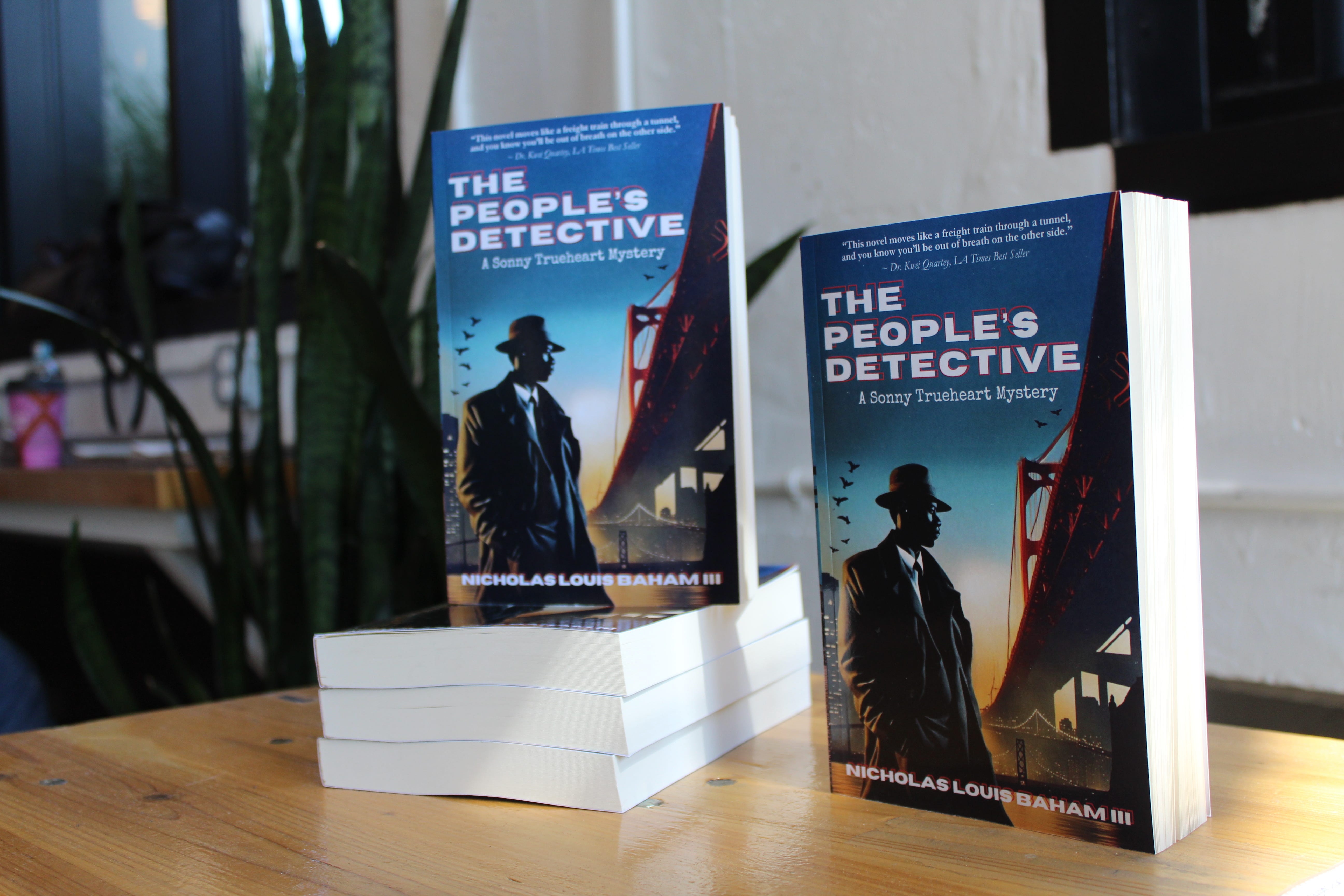
The People's Detective on Amazon.com
The People's Detective on Barnes & Noble
The People's Detective on Bookshop.org
The People's Detective on Thrift Books
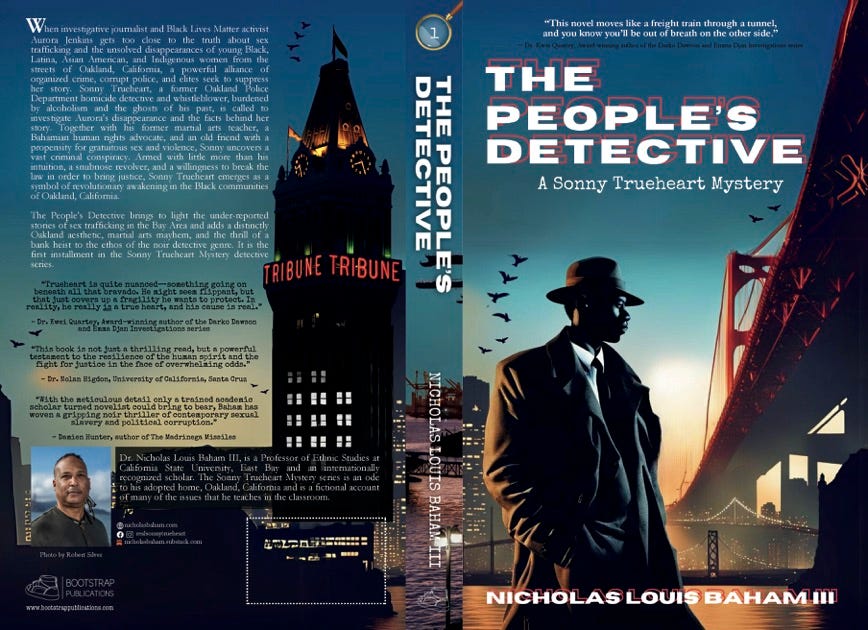

From Oakland with Love,
Sonny Trueheart